In the last decade, smartphones have evolved from basic communication devices into powerful mini-computers that fit in your pocket. With high-speed processors, ample RAM, cloud integration, and stunning displays, the question isn’t if smartphones will replace laptops for many users it’s when.
📱 The Rise of the Pocket Powerhouse
Today’s flagship phones, like the Samsung Galaxy S24 Ultra or iPhone 15 Pro Max, pack specs that rival — and sometimes surpass — mid-range laptops:
- Processors: Apple’s A17 Pro and Qualcomm’s Snapdragon 8 Gen 3 are pushing boundaries in speed and energy efficiency.
- RAM & Storage: 12GB RAM and 1TB storage on a phone was once a dream — now it’s reality.
- Displays: AMOLED screens with 120Hz refresh rates offer desktop-quality visuals in a much smaller package.
With these upgrades, phones are not just for scrolling social media — they’re ready for video editing, document processing, gaming, and even coding.
🧠 Desktop Mode: Bridging the Gap
Technologies like Samsung DeX and Motorola Ready For allow users to plug their phones into a monitor and use a desktop-like interface. Pair it with a Bluetooth keyboard and mouse, and you’ve essentially got a computer.
Even Google is rumored to be developing a native desktop mode for Android, which could further blur the lines between phone and PC.
☁️ Cloud Computing + 5G = No Limits
Thanks to cloud-based services like:
- Google Workspace
- Microsoft OneDrive
- Adobe Creative Cloud
…and the rise of 5G, you can access your work files from anywhere, edit videos, stream high-quality content, or even game remotely using services like Xbox Cloud Gaming or NVIDIA GeForce NOW.
🔋 Battery Life & Portability
Laptops still struggle with battery life — many last 5–7 hours under real use. Phones? You can go a full day, and with power banks or fast charging, the downtime is minimal. Phones also win when it comes to portability, needing no extra bag or case to carry around.
😟 But… Not All Sunshine
Despite the advancements, phones still face limitations:
- Screen size: For intense multitasking or large spreadsheets, phones can be frustrating.
- Thermal limits: Extended high-performance tasks can cause overheating.
- App functionality: Not all desktop apps are optimized for mobile.
🌐 The Future?
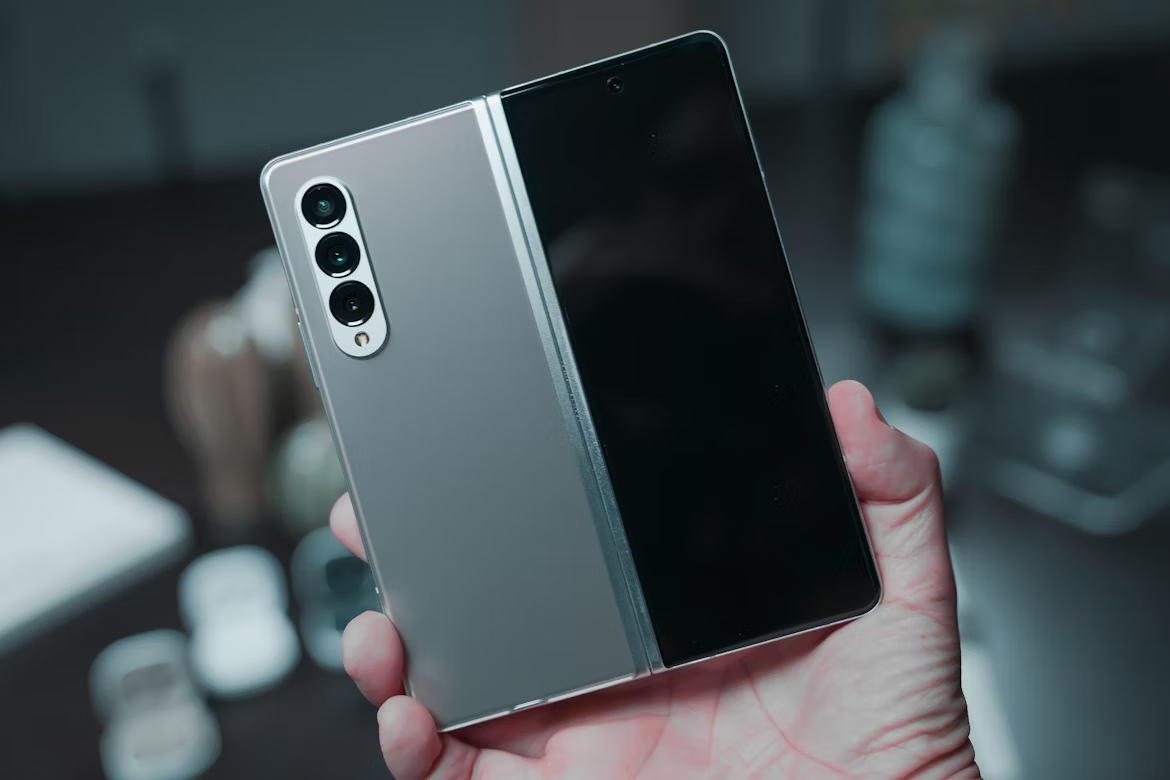
We’re already seeing foldable phones (like Samsung Galaxy Z Fold 5) that open into tablet-sized screens. Combine that with better accessories, cross-platform apps, and more efficient cooling, and phones might become the only device you need.
As AI-driven apps get smarter, cloud computing expands, and phone hardware rivals PCs, the day you ditch your laptop entirely might not be far off.
TL;DR: Your smartphone is no longer a sidekick to your laptop — it’s becoming the main character.